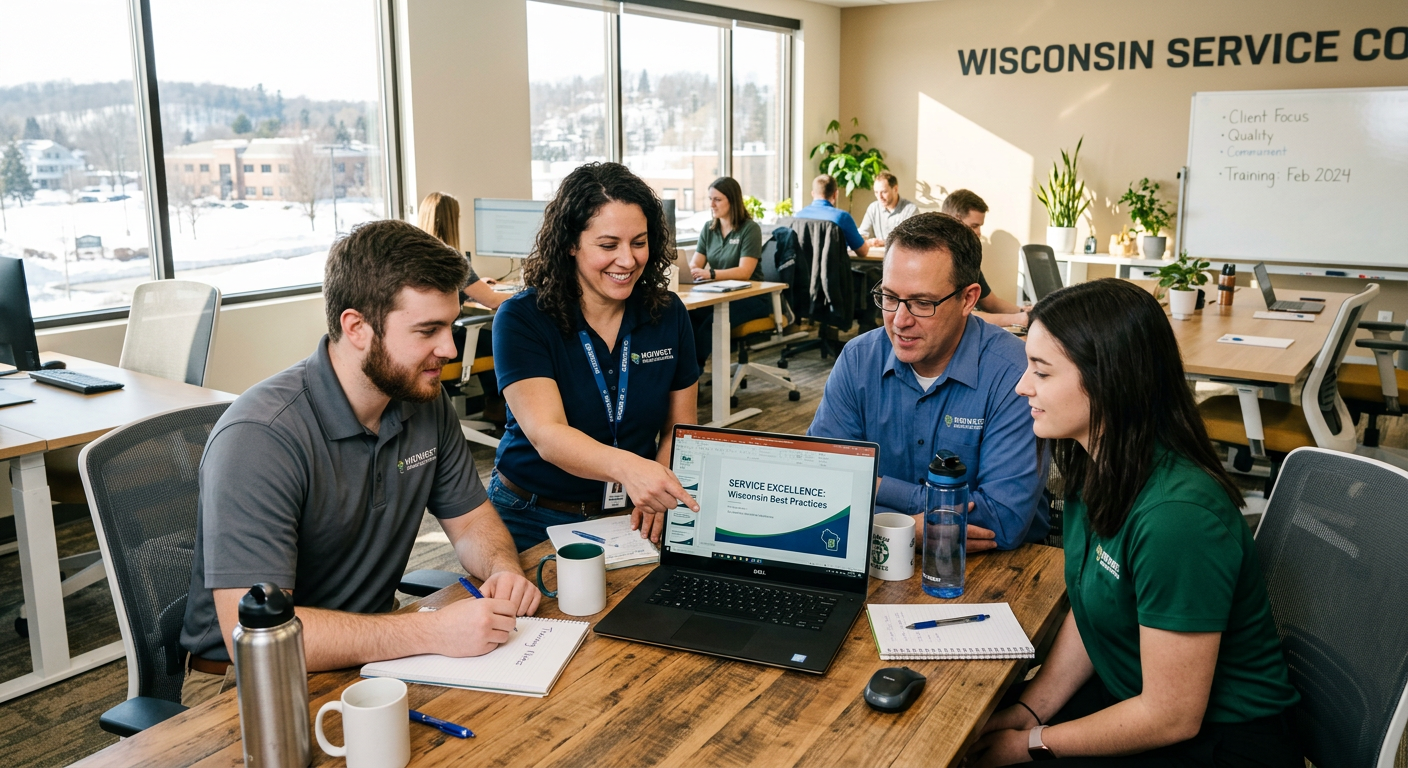
Wisconsin businesses can often access state-funded grants like the Wisconsin Fast Forward program through the Department of Workforce Development to offset employee training costs. While these programs do not always have an "AI-only" category, they frequently support technical skills training that helps workers use new automation tools to increase productivity. You should contact the DWD directly to confirm current grant cycles, eligibility requirements, and application deadlines.
What state programs support worker training in Wisconsin?
The primary vehicle for workforce training support is the Wisconsin Fast Forward grant program, managed by the Department of Workforce Development (DWD). This program provides employer-focused grants to help businesses train both new and existing employees in high-demand skills. Because AI and automation are increasingly viewed as essential technical skills, these programs may cover the costs of bringing in outside consultants or trainers to upskill your staff.
Other regional economic development corporations and local workforce boards sometimes offer smaller training subsidies. These are typically structured as reimbursements rather than upfront cash, meaning your business pays for the training first and then submits proof of completion to get funds back. Before committing to a program, ensure the training provider meets the state's criteria for a qualified vendor.
How do you scope an AI training program for grant approval?
To qualify for most state training grants, you must demonstrate a specific business need and a clear set of skills your employees will gain. State agencies generally do not fund vague "AI overview" sessions; they want to see how the training leads to improved job security or higher wages for your team. A successful application usually includes a detailed syllabus, a list of participating employees, and the expected outcomes for the business.
When planning your AI training, focus on specific workflows rather than general theory. For a service business, this might include training dispatchers on how to use AI-assisted scheduling or teaching property managers how to manage resident communication through automated platforms. Showing a direct line between the training and increased operational efficiency makes your case much stronger to grant reviewers.
Recommended Training Components for Service Businesses
- Workflow Documentation: Training your team to identify and document the repetitive tasks that eat their time.
- Tool Proficiency: Hands-on sessions for specific platforms like ChatGPT, Claude, or custom internal agents.
- Data Privacy: Teaching staff how to use AI tools safely without exposing sensitive client or company data.
- Human-in-the-Loop Oversight: Training employees to review, edit, and approve AI-generated outputs to maintain quality.
Does AI training actually save a business money?
AI training saves money by reducing the hours your staff spends on low-value administrative tasks, allowing them to focus on revenue-generating work. In a service business like HVAC or property management, the goal isn't usually to cut staff, but to stop your best people from being bogged down by paperwork or basic phone inquiries. Training ensures that when you deploy an automation, your team knows how to manage it rather than fear it.
From the field: For many of our clients, the real return on training comes from time recovery. We have seen back-office workflows where 4-10 hours per week are recovered per person. This is achieved not just by installing software, but by ensuring every team member understands how to sit beside the automation, providing the human oversight needed to approve invoices or review resident communications before they go out.
What are the limitations of grant-funded training?
The biggest limitation of state grants is the administrative overhead and the strict timeline requirements. You cannot start the training until the grant is officially approved, which can take several months. If your business needs to move fast to solve a bottleneck, waiting for a grant cycle might cost you more in lost productivity than the value of the grant itself. Additionally, grants rarely cover the cost of the software or the AI tools themselves—they only cover the "people cost" of the training.
Another trade-off is the reporting requirement. You will likely need to track employee hours, submit payroll records, and provide post-training reports to the state. For a small shop with five employees, the time spent managing the grant paperwork might outweigh the financial benefit. It is important to weigh the value of the training dollars against the cost of your time spent on the application.
How should a property manager or trades operator start?
Start by auditing where your team is currently losing time before you look for a grant. You need to know exactly what you are training them to do differently. For example, if you are an HVAC owner, you know an average service ticket is $400 to $1,200. If your staff is missing calls because they are busy with filing, training them to use an AI receptionist is a high-value move. You can read more about starting this process in our business AI guide.
Once you have identified the specific tasks you want to automate, check the current "rounds" of Wisconsin Fast Forward. These grants are often released in specific windows throughout the year. If a window is open, you can align your training plan with their requirements. If not, you may decide the immediate ROI of training your team on your own dime is worth the investment.
| Phase | Action Item | Goal |
|---|---|---|
| Audit | Track team tasks for one week | Identify manual bottlenecks |
| Strategy | Select 1-2 specific AI tools | Focus the training scope |
| Grant Check | Visit DWD Wisconsin Fast Forward site | Verify current funding cycles |
| Execution | Schedule 30-minute hands-on blocks | Avoid employee burnout |
Why custom training matters more than generic courses
Generic AI courses often focus on things like "how to write a poem" or "how to generate an image," which have zero value for a service business. Your training needs to be grounded in your actual systems of record. For property managers, this means understanding how AI interacts with tools like Rent Manager. We built Penkert Pulse for a Wisconsin client to handle resident experience across 800+ units. The training there wasn't about AI in general; it was about how the team reviews 1-4 star Google reviews before they are published.
Direct, vocational training ensures that the technology actually gets used. If your team is skeptical of AI hype, showing them a tool that handles the "grunt work" while they keep the final say is the best way to get buy-in. Whether you use a grant or pay out of pocket, the training must be practical, measurable, and tailored to your specific business operations.
By Jon Pfeiffer, Founder of Pfeiffer Digital
Jon Pfeiffer is a former product leader at Disney and Amazon who now helps Wisconsin service businesses automate their operations.
If you are trying to figure out if your training plan qualifies for funding or just want to see where AI fits in your shop, let's talk. Get your free AI audit or learn more about our AI training workshops. No pitch, just a straight look at your workflows.
Frequently Asked Questions
What is the main grant for worker training in Wisconsin?
The Wisconsin Fast Forward program, managed by the Department of Workforce Development (DWD), is the primary source of worker training grants. These grants are designed to help employers train their workforce in new technologies and high-demand skills. While not exclusively for AI, the program frequently supports technical training that includes automation and AI implementation to improve business efficiency.
Who is eligible for Wisconsin workforce training grants?
Most state grants require a detailed training plan, a list of participating employees, and a clear explanation of how the training will benefit the business and the workers. Training must usually be provided by a qualified third party. Because these programs are competitive and run in cycles, you should check the DWD website for the specific requirements of the current funding round.
Do these grants cover the cost of AI software?
Grants typically cover the direct costs of instruction, such as consultant fees, training materials, and sometimes a portion of the employees' wages during training hours. They generally do not cover the cost of purchasing AI software, hardware, or general business subscriptions. The focus is strictly on the 'upskilling' of the human workforce.