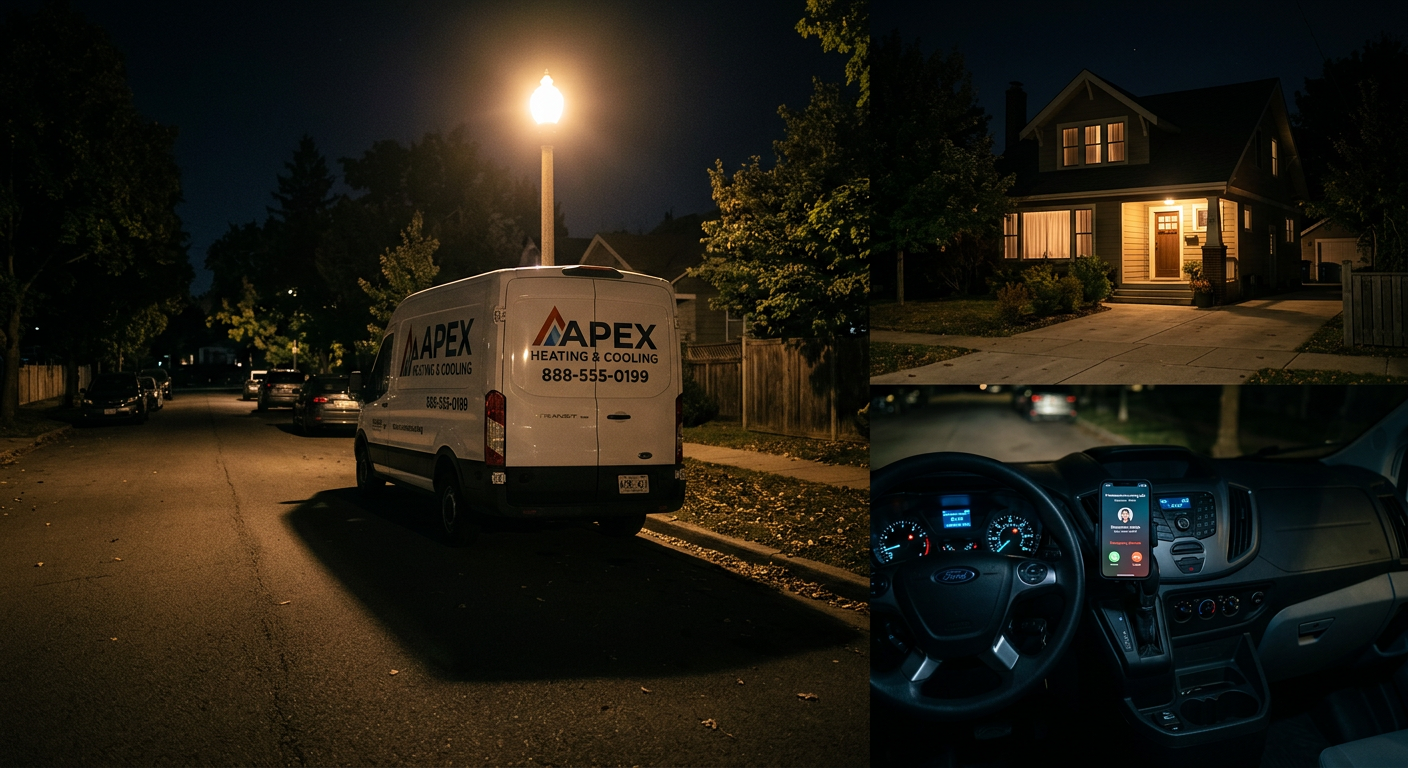
HVAC companies handle after-hours calls using three primary methods: traditional answering services with live operators, rotating on-call technicians who take direct calls, or voice AI agents that qualify emergencies and book appointments. While live services offer a human touch, modern AI systems now provide immediate response times and direct integration with dispatch software without the high per-minute costs or human errors common in call centers.
What is the cost of missing an after-hours service call?
Missing a single after-hours call often results in a lost customer and hundreds of dollars in immediate revenue. In the HVAC industry, an average service ticket ranges from $400 to $1,200. When a homeowner’s furnace fails in the winter or an AC unit dies during a heatwave, they rarely leave a voicemail; they simply call the next company on the search results list. Ensuring someone or something answers that call is the difference between a booked job and a lead handed to your competitor.
For most residential service providers, the "after-hours" window accounts for more than half of the total hours in a week. If your office closes at 5:00 PM, you are potentially dark for 14 or 15 hours until the next morning. Relying on a standard voicemail greeting during these times tells the customer your business is closed, even if you have a technician ready to work. This gap in coverage is where most growth-minded shops struggle to balance technician burnout with the need for revenue.
How do traditional answering services compare to AI voice agents?
Traditional answering services provide a human voice but often struggle with technical accuracy and long-term costs, whereas AI voice agents offer instant dispatching and lower overhead. A live answering service typically charges by the minute or by the call, which can become expensive during peak weather events. Furthermore, these operators are often juggling multiple industries and may not follow your specific triage protocols correctly, leading to "emergency" dispatches for non-emergency filter changes.
Voice AI agents designed for hvac after hours calls solve this by following your exact logic every time. They don't get tired, they don't put customers on hold, and they can instantly push data into your CRM. For an operator, this means your on-call technician only gets woken up for true emergencies, like a complete system failure or a leak, rather than a general inquiry that could wait until Monday morning. You maintain control over the customer experience without paying for a full-time human presence 24/7.
What are the main challenges of an on-call rotation?
The primary challenge of an on-call rotation is technician burnout and the high cost of overtime pay for non-essential calls. When a technician is required to answer the phone directly, they are essentially working a double shift. This leads to fatigue, lower morale, and eventually, high staff turnover. If the technician is busy on a repair, they cannot answer the next incoming call, which puts you right back at the problem of missed opportunities.
By implementing a buffer between the customer and the technician, you protect your team's time. A system that qualifies the caller first ensures that your team only responds to high-value, urgent work. This keeps your $400-$1,200 average service tickets flowing without exhausting your best installers and mechanics on administrative tasks or low-priority questions.
When is AI the wrong fit for HVAC after-hours calls?
AI is the wrong fit for your business if your primary customer base is significantly older and resistant to any form of automated interaction, or if your dispatching logic is so disorganized that a human needs to make a subjective "gut" decision on every call. While modern voice AI is highly conversational and friendly, some ultra-premium "white glove" brands prefer the optics of a live receptionist regardless of the cost or potential for error. If you cannot clearly define what constitutes an emergency versus a standard service call, no system—AI or human—will work effectively for you.
Additionally, if your business only receives one or two after-hours calls a month, the setup for a sophisticated automated system may not be necessary. You should look at your call logs first. If you see dozens of missed calls or high answering service bills, the transition makes sense. If your volume is near zero, a simple cell phone transfer to the owner might still be the most practical path.
How does document automation help back-office HVAC operations?
Document automation assists HVAC companies by extracting data from supplier invoices and matching them to purchase orders without manual data entry. While the focus is often on the phone calls, the administrative work following a service call can be just as taxing. When your technicians buy parts for an emergency midnight repair, those receipts and invoices eventually hit the office.
Using AI to handle document extraction means a human only needs to review the data for accuracy before it enters your system of record. It isn't about auto-approving payments; it is about removing the four to ten hours per week spent typing numbers from a piece of paper into a computer. This keeps your back-office lean even as your after-hours call volume grows.
What should you look for before choosing a solution?
Before deciding on a method for handling after-hours calls, you must audit your current lead flow and determine your true "cost per missed call." Look at your phone logs for the last 90 days. Identify how many calls came in after 5:00 PM and on weekends. If you missed five calls, and each represents a potential $400-$1,200 ticket, you are looking at thousands of dollars in lost gross revenue every month.
You should also evaluate your current dispatch software. A good after-hours solution should "talk" to your existing tools. If a voice agent or answering service takes a message but you still have to manually type it into your system the next morning, you have only solved half the problem. The goal is a seamless flow from the customer's phone to your technician's mobile app.
Ready to see how your specific business can recover time and capture more leads? Schedule a free AI audit (30 min) to discuss your current workflow and how we can automate your phone and back-office operations.
By Jonathan Pfeiffer, Founder of Pfeiffer Digital
Jonathan Pfeiffer has led product and engineering initiatives for organizations including Disney, Amazon, and the NBA, and now helps service businesses implement practical AI automation.
Frequently Asked Questions
What are the different ways HVAC companies handle after-hours calls?
HVAC companies generally use live answering services, automated phone menus (IVR), on-call technician rotations, or AI voice agents. The goal is to distinguish between true emergencies, like a broken furnace in mid-winter, and routine maintenance requests that can be scheduled during normal business hours. AI agents are becoming popular because they can book appointments directly without human intervention.
How much revenue is lost by missing an after-hours call?
The average HVAC service ticket ranges from $400 to $1,200. When a customer calls after hours, they are usually in distress. If they get a voicemail, they will likely call the next business on the list. Answering these calls immediately, either through a service or AI, ensures you capture this high-value revenue rather than losing it to a competitor.
Is an AI voice agent better than a live answering service?
Traditional answering services provide a human touch but are often expensive and prone to errors in triage. AI voice agents provide instant responses, never put customers on hold, and integrate directly with dispatch software. For many HVAC operators, AI is a more scalable way to handle high call volumes during extreme weather without increasing overhead.
How much does an HVAC answering service cost?
Answering services typically charge by the minute or by the call. While specific pricing varies by provider, these costs can spike during heatwaves or cold snaps when call volume increases. Many businesses find that AI solutions provide a more predictable cost structure while handling unlimited simultaneous calls, which live services cannot do without long hold times.
How can I handle after-hours calls without burning out my technicians?
Protecting technicians from burnout is critical. A system that uses AI to triage calls ensures that on-call technicians are only alerted for genuine emergencies. This prevents them from being woken up for non-urgent tasks, helping to maintain morale and reduce staff turnover in a competitive labor market.