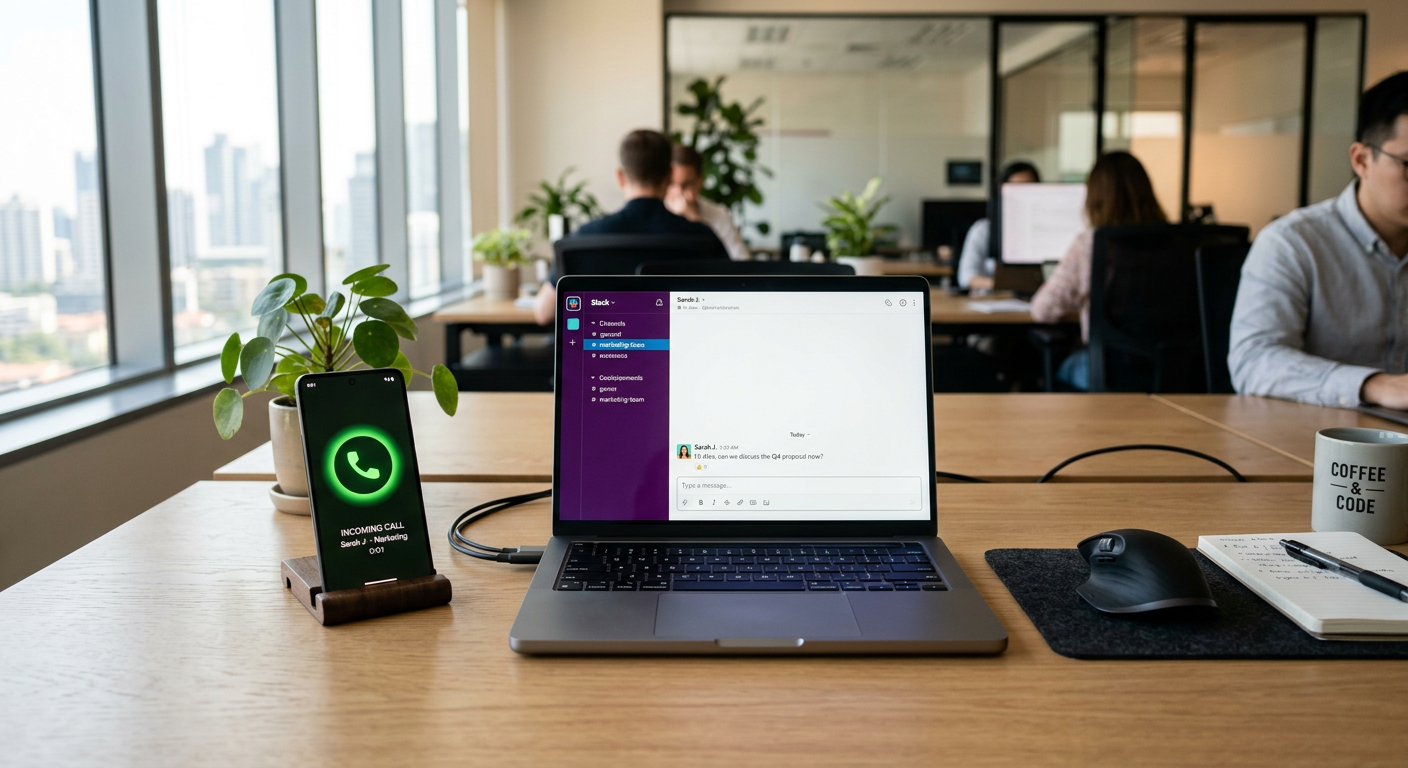
Decide whether you need a chatbot or a voice agent by identifying where your customers already try to reach you. If your customers are calling your office line to book services or report emergencies, you need a voice agent; if they are browsing your website for quick answers or pricing, a chatbot is the correct choice.
Which tool should I prioritize first?
You should prioritize the channel that currently has the highest volume of missed opportunities or human bottlenecks. For most service businesses like HVAC, plumbing, or property management, the phone is the primary lifeline, making a voice agent the most immediate value-add. If your office staff spends hours every day answering the same three questions about service areas or basic pricing, a voice agent can handle those calls 24/7 without a break.
A chatbot is better suited for high-traffic websites where users prefer typing over talking. Property management companies often find chatbots useful for initial resident screening or directing current tenants to the right portal for payments. However, in an emergency—like a burst pipe at 2:00 AM—a tenant will almost always call rather than type. In that scenario, a voice agent is the only tool that actually solves the problem in real-time.
What is the main difference in how customers use them?
The primary difference is the "intent" of the user based on the medium they chose to reach you. A caller is looking for an immediate, synchronous conversation to solve a specific problem or book a specific time. They expect a "hello" and a direct path to a resolution. A website visitor is often in a research phase, looking for asynchronous information they can digest at their own pace.
Think about your own habits. When you want to know if a restaurant is open, you might check the site. When you want to book a table for ten people on a busy Friday, you call. Service businesses follow this exact pattern. The voice agent handles the "do it now" tasks, while the chatbot handles the "tell me about this" tasks.
How do I know if my business is ready for a voice agent?
Your business is ready for a voice system if you are currently missing calls after hours or if your front-office staff is overwhelmed by routine inquiries. Voice agents have matured to the point where they can hold natural, fluid conversations without the "press 1 for sales" menus that frustrate customers. These systems can now check your actual calendar and book an appointment directly into your CRM.
Before deploying voice, you need a clear understanding of your current phone workflow. You must know exactly what happens when a call comes in: who answers, what questions are asked, and where that data goes. If your manual process is broken, automating it with a voice agent will only break it faster. You can learn more about the technical side of these systems in our Deepgram for voice AI guide, which explains how machines "hear" and process speech.
When is a chatbot the wrong choice?
A chatbot is the wrong choice when your customers are dealing with high-stress situations or complex, multi-step problems that require nuance. If a homeowner has a failing furnace in sub-zero Wisconsin temperatures, a typing-based chatbot feels like a barrier rather than a bridge. They want to hear a voice that confirms help is on the way.
Additionally, chatbots fail when they are configured as "gatekeepers" that make it impossible to reach a human. If the bot doesn't know the answer, it should immediately offer to route the transcript to a staff member for a follow-up. Using a bot to hide from your customers will always result in lost leads and poor reviews.
What are the technical limitations of these tools?
Voice agents rely on low-latency connections to feel natural; if there is a two-second delay between the customer speaking and the bot responding, the "uncanny valley" effect makes the caller uncomfortable. Chatbots, while easier to deploy, struggle with "hallucinations" if they are allowed to browse the open web instead of being restricted to your specific business data. Both tools require a "human in the loop" for complex edge cases.
- Voice Agent Pros: Handles 100% of calls, no hold times, direct CRM integration, higher conversion for service calls.
- Voice Agent Cons: Requires high-quality logic to handle interruptions, sensitive to background noise.
- Chatbot Pros: Low cost, handles multiple people at once, great for visual data (links, PDFs, images).
- Chatbot Cons: Easily ignored by users, lower engagement for emergency services, can feel impersonal.
How do these tools fit into a trades or property management workflow?
In a service-based business, these tools act as the "air traffic control" for your leads and work orders. For an HVAC company, a voice agent can identify a "no heat" call, verify the customer is within the service area, and book them for the next available slot based on a $400-$1,200 average service ticket. For property managers, a chatbot can handle the "how do I pay my rent?" questions while the voice agent handles the "my ceiling is leaking" calls.
From the field: A 24/7 AI receptionist for a Wisconsin HVAC client now answers 100% of inbound calls, resulting in zero missed leads since deployment. This ensures that every potential high-value ticket is captured, regardless of whether the office is open or the staff is on another line.
Which one is easier to maintain?
Chatbots are generally easier to maintain because text is easier to edit than conversation logic. You can update a chatbot's knowledge base by simply uploading a new PDF of your 2024 pricing or service terms. A voice agent requires more careful testing to ensure the "tone" and "pacing" of the speech remain professional and helpful. However, the higher maintenance of a voice agent usually reflects a higher return on investment for service-heavy businesses.
Regardless of which you choose, the system should sit beside your existing tools. A human should always be able to review the transcripts and recordings to ensure quality. The goal isn't to replace your staff, but to give them back the 4-10 hours per week they currently lose to repetitive tasks.
By Jon Pfeiffer, Founder of Pfeiffer Digital
Jon leverages his background in product engineering at Amazon and Disney to help small businesses implement practical AI that actually works.
Frequently Asked Questions
What is the difference between a chatbot and a voice agent?
A voice agent is an AI system that answers phone calls, speaks in a natural human voice, and can perform tasks like booking appointments or routing emergencies. A chatbot is a text-based interface on a website or app that answers questions and collects information via typing. Use a voice agent for phone-heavy service businesses and a chatbot for informational or screening needs.
Which is better for lead generation?
If your business relies on inbound calls for revenue, such as HVAC, plumbing, or property management, a voice agent is usually the better investment. It ensures you never miss a lead and can handle high-intent customers who want an immediate resolution. Chatbots are better for lower-urgency research tasks.
Can I use both a chatbot and a voice agent?
Yes. Many businesses use a chatbot on their 'Contact' and 'FAQ' pages to handle quick text inquiries, while using a voice agent to manage their primary office line. Both systems can be connected to the same CRM so that all customer data is stored in one place.