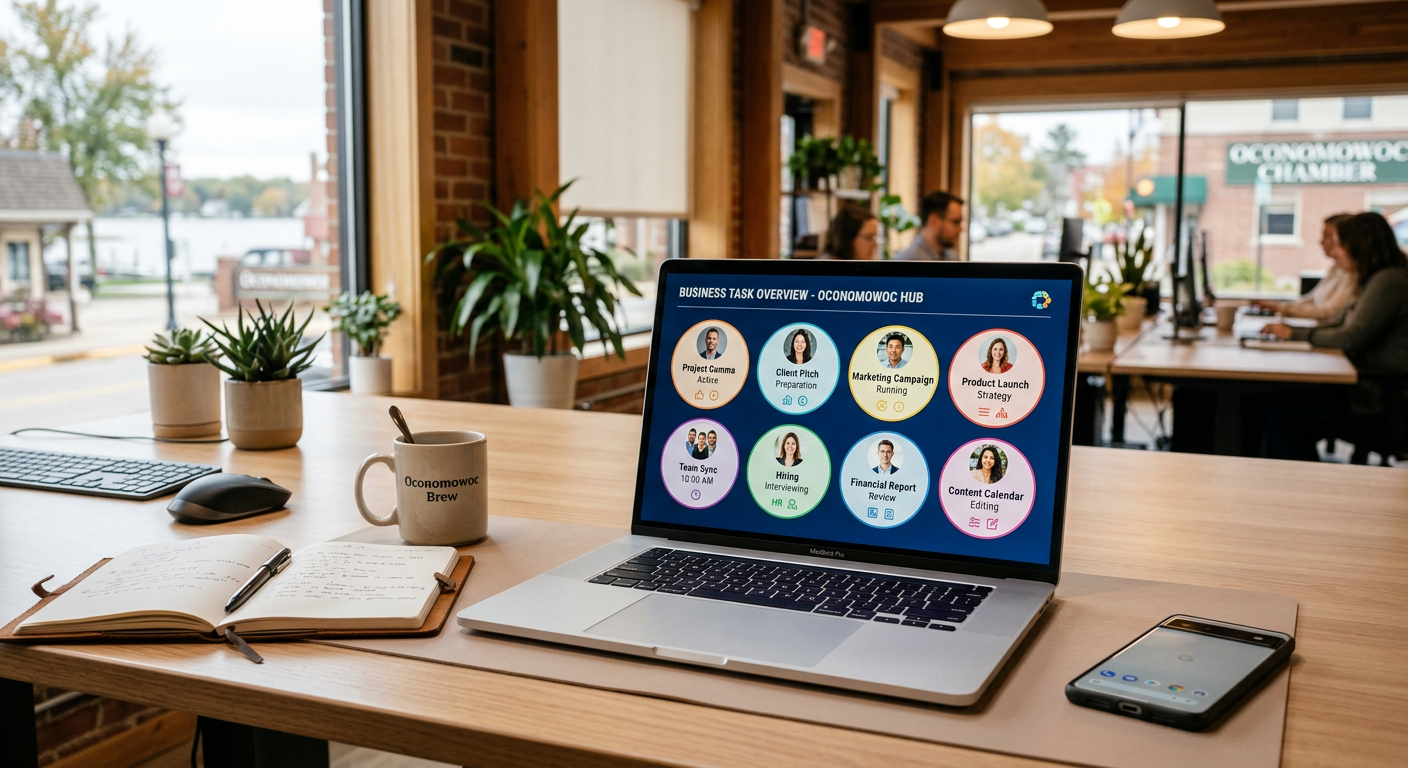
This week in AI, the focus shifted from simple chatbots to "AI workforces." The biggest news is that tools like Relevance AI now allow small businesses to build digital employees that handle multi-step back-office tasks like lead qualification, research, and data entry. For owners, this means shifting from using AI as a typing assistant to using it as a scalable department.
The one that matters: Relevance AI for SMB
Relevance AI is a platform designed to let you build "AI Agents" that do actual work, not just answer questions. Think of it as a digital hire that never sleeps and follows your SOPs exactly. While large companies have used similar tech for a year, Relevance AI has made it accessible for a 20-person HVAC company or a local property management firm.
For a business owner, this means you can build a lead researcher agent. This agent sees a new lead in your CRM, visits the prospect's website, finds their recent news or pain points, and drafts a personalized email for your sales team to review. It moves data between your email, your spreadsheets, and your industry-specific software without you needing to touch a keyboard.
The cost is usage-based, often starting around $19 per month for basic access, making it a low-risk way to test digital employees. At Pfeiffer Digital, we use these types of agents to help clients recover 4 to 10 hours per week per person by automating the repetitive research and data entry that clogs up the middle of the workday.
Also this week
- Google expanded Gemini Live to all Android users for free: This allows you to have a natural, conversational voice interaction with an AI. It is useful for owners who need to brainstorm a marketing plan or talk through a business problem while driving between job sites.
- Microsoft announced "Copilot Pages" for team collaboration: This tool lets your staff take AI-generated content and put it into a shared workspace where multiple people can edit it at once. It helps teams turn raw AI notes into actual internal manuals or project plans without constant copy-pasting.
- OpenAI released a "Strawberry" model (o1-preview) with reasoning capabilities: This new model takes longer to "think" before it speaks, making it much better at complex math and logic. If you have been frustrated by AI making mistakes on simple logic or scheduling, this update solves many of those errors.
- NotebookLM added a "Deep Dive" audio feature: You can upload your long PDFs or company handbooks, and it creates a podcast-style summary of the content. This is a great way to help new hires learn your company's history or safety manuals during their commute.
What to do about it this week
- Audit your "middle office": Look for any task where an employee takes information from one screen and types it into another. These are the first tasks we target for a Relevance AI workforce.
- Test a reasoning model: The next time you have a complex scheduling problem or a math-heavy spreadsheet issue, try using the "o1" model in ChatGPT instead of the standard version.
- Check your data privacy: As you start using tools like Relevance AI, ensure your team isn't putting sensitive client financial data into the tools without proper security settings.
- Get a professional roadmap: If you aren't sure which of these tools will actually save you money, get your free AI audit. We will look at your current workflow and tell you exactly which tool fits your specific business.
What to ignore
- The "AGI" hype: You will hear tech influencers talking about AI becoming smarter than humans. For your business, this doesn't matter; you only need it to be smart enough to handle a maintenance request or a purchase order.
- Complex coding tools: Many updates this week focused on helping software engineers. Unless you are building your own apps from scratch, these tools will likely just distract you from running your business.
By Jonathan Pfeiffer, Founder of Pfeiffer Digital
Last updated: 2026-10-09
Frequently Asked Questions
What is Relevance AI and how does it help small businesses?
Relevance AI is a platform that allows businesses to create AI Agents. Unlike a standard chatbot, an agent can be trained on your specific SOPs (Standard Operating Procedures) to perform multi-step tasks, such as researching leads or moving data between different software programs. It acts more like a digital assistant than a search engine.
What does it mean to build an AI workforce?
An AI workforce is a collection of specialized AI agents that handle repetitive, rules-based tasks. For example, one agent might monitor your inbox for invoices, another extracts the data for human review, and a third updates your project tracker. It allows your human staff to focus on high-value work while the AI handles the data entry.
Do I need a technical background to use these new tools?
No. While many tools are becoming more powerful, you do not need to be a coder to use them. Platforms like Relevance AI use "no-code" interfaces. However, setting them up to work correctly with your existing systems often requires a clear strategy, which is why we recommend starting with a professional audit to map out your workflows.